Industrial cameras have been standard equipment on production, assembly, and warehouse floors for years. Most of the time, however, they act as passive observers - footage goes straight to the archive and is only reviewed when something goes wrong. AI-powered video analytics flips this logic: the camera feed becomes a source of data that both drives real-time reactions and accumulates over time into a basis for analysis and future optimization.
In this article, we present concrete, field-proven applications of ComputerVision.
How Does It Work?
The starting point is something most facilities already have - cameras.Recorded footage from the production floor becomes training material - selected frames showing the objects and situations that matter (a correct product, a defect, a missing helmet, an assembly step) are labeled and used to teach a computer vision model what to look for. In other words, the model learns from examples taken directly from your facility, not from generic stock imagery, which is why it can handle the specific products, lighting, and camera angles of your site.
The trained model, however, is only part of the solution. On its own, it can recognize objects in an image - but to deliver business value, it needs to be wrapped in software that puts it to work: connecting to the live video streams, running the model on them continuously, processing and filtering its detections, storing the results, and translating them into what stakeholders actually expect - automated actions, alerts, reports, and statistics. This surrounding layer is what turns a model into a working system.
Once deployed, the system watches the live camera feed and recognizes objects and events on its own, around the clock. From there, the detections can work in two ways - often both at once. In real time, the system reacts the moment something happens: it rejects a faulty item, triggers an alert, or notifies a supervisor. In the background, every detection is logged as structured data - counts, times, and events - which feeds dashboards, reports, and long-term analysis, turning everyday camera footage into a reliable source of operational insights.
The examples below show what this looks like in practice.
Quality Control
Quality control is the area where video analytics delivers measurable and immediately visible benefits. A human inspector on the line gets tired, loses focus, and is physically unable to evaluate every single item at high production speeds. A vision system works with the same precision 24 hours a day - and documents every detected defect with an image and a report entry.
Detecting Defects on the Production Line
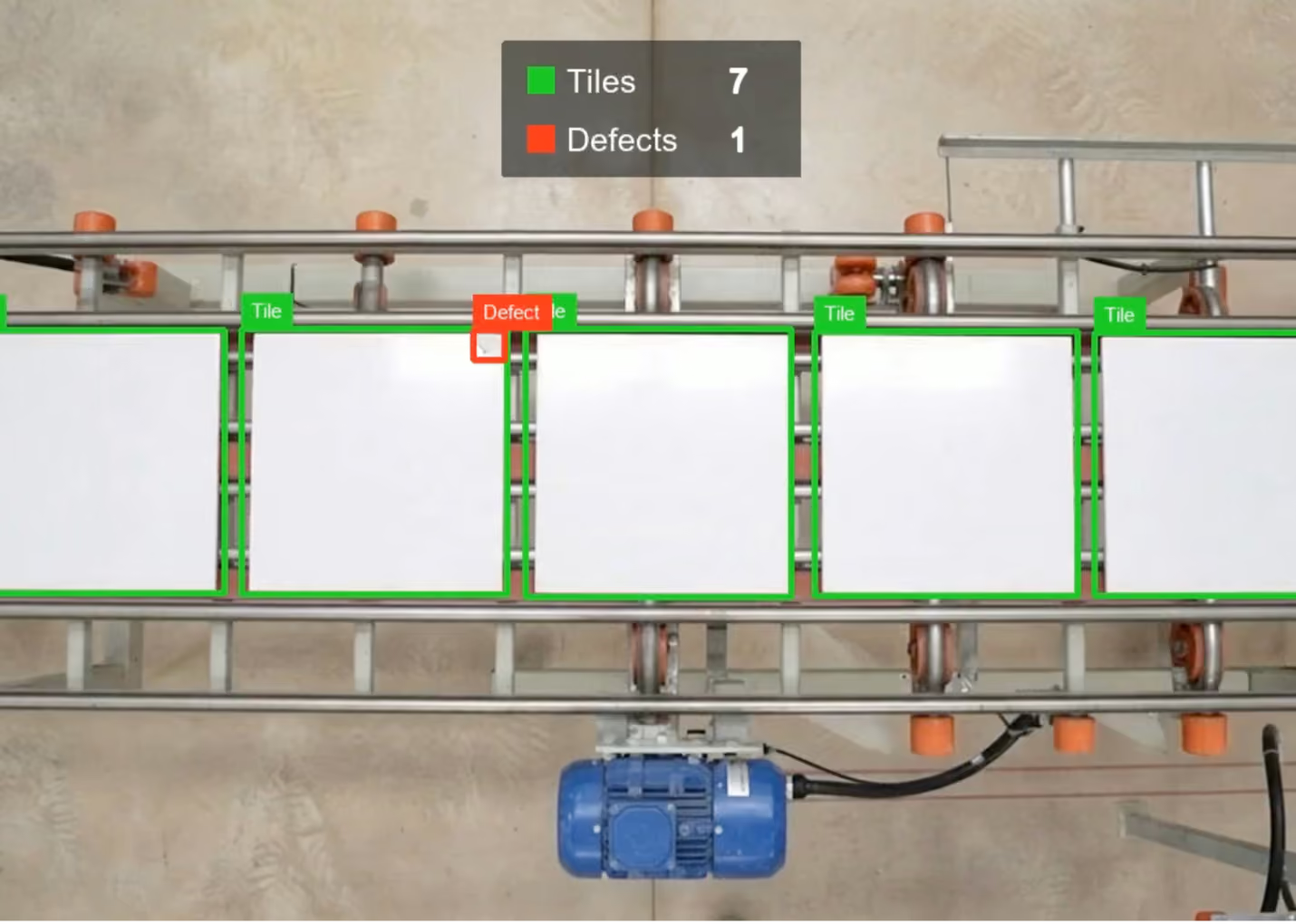
Anomaly detection models analyze the image of every product passing along the line and catch scratches, dents, cracks, or discolorations - including those that easily escape the human eye. A detected defect can automatically stop the line, reject the faulty item, or simply log the event in a report, depending on the business rules in place.
Verifying Fill and Dosing Levels
Wherever a product is filled, dosed, or portioned, the vision system can verify that the correct amount ends up in every unit, continuously and in real time. Deviations from the target level are detected immediately, before the product moves on to the next stage, protecting against both customer complaints and raw material losses. A typical example is a bottling line, where the system monitors the liquid level in every bottle and instantly flags any that are underfilled or overfilled - but the same mechanism applies equally to jars, cans, pouches, or dosed portions of bulk products.

Verifying Labels and Markings
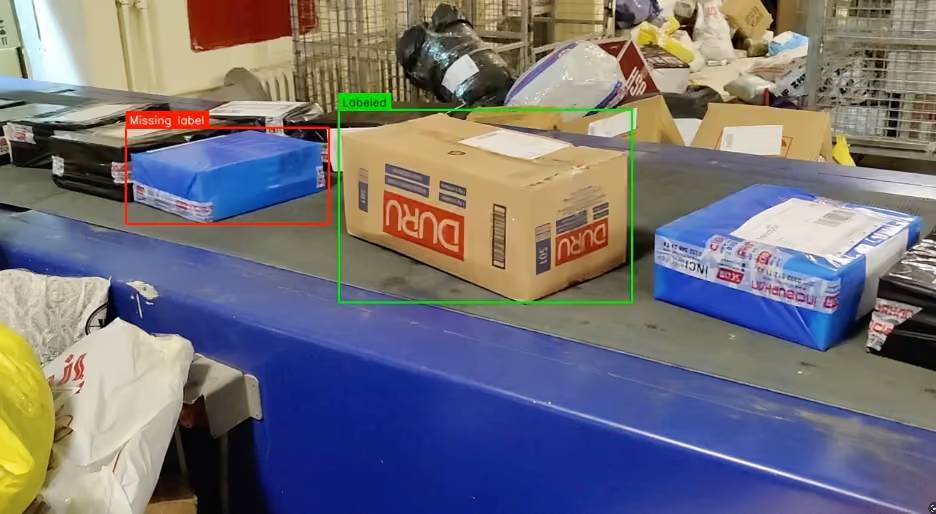
A vision system can read and validate any label, code, or marking a product carries - confirming that it is present, correctly placed, readable, and consistent with the accompanying documentation or expected values. This covers a wide range of everyday cases: logistics labels on pallets before shipment, barcodes and QR codes on unit packaging, batch numbers and expiry dates on food or pharmaceutical products, serial numbers on manufactured goods, or safety markings on components.
Detecting Oversized Objects
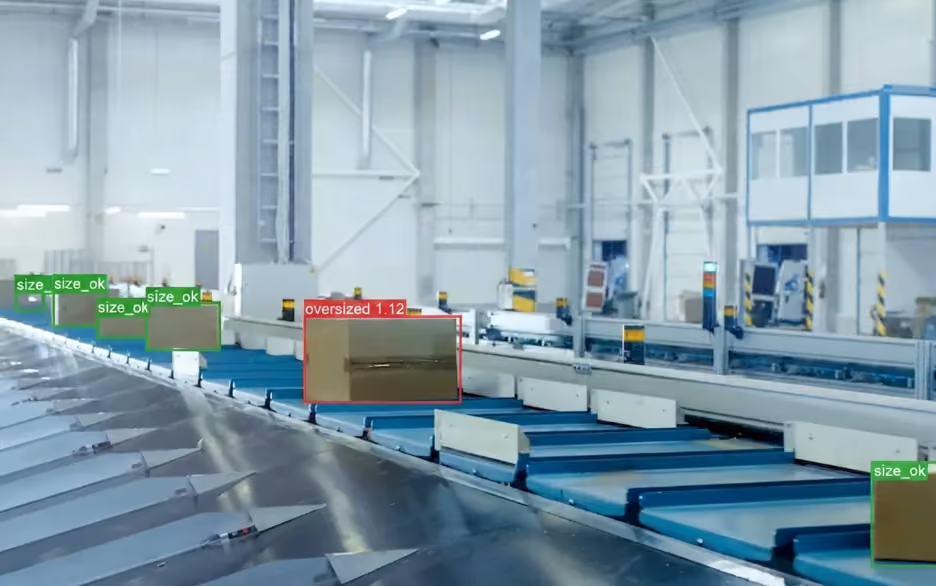
Video analytics can measure the dimensions of objects in motion and flag those that fall outside the defined norm - whether it's parcels in a sorting facility, products on a packing line, or loads leaving a warehouse. An oversized item that would jam a sorter, block a conveyor, or fail to fit its packaging is detected before it causes costly downtime further down the line.
Verifying Process Steps
Was every step of the sequence completed, and in the correct order - every screw installed, every component fitted, every box properly closed? The system tracks the progress of work in real time and immediately signals a missed or out-of-order operation - before the product moves on to the next station. This eliminates a whole class of errors that are cheap to fix at the workstation but expensive to fix after shipping.

Checking Product Completeness
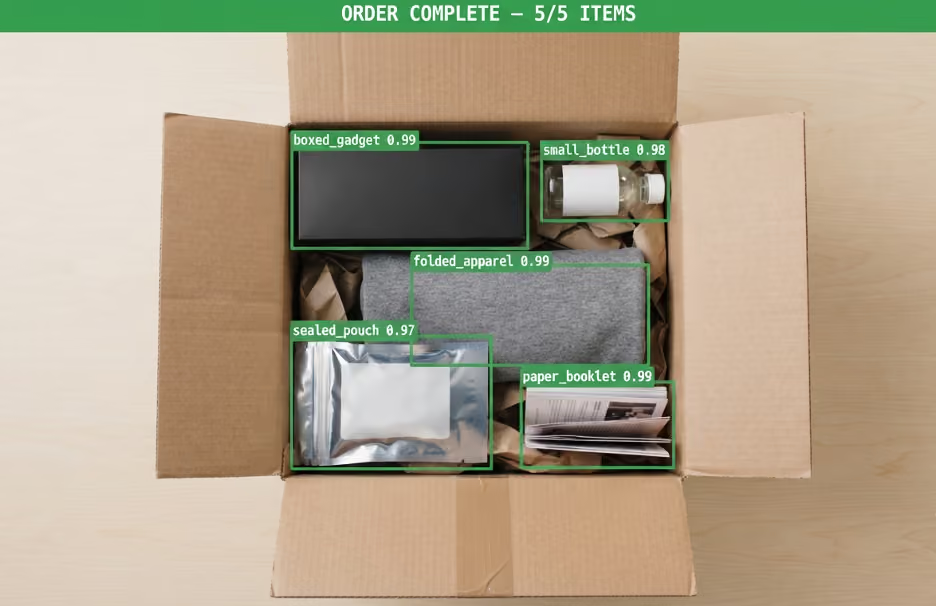
Before a product leaves the workstation or the packing area, the vision system verifies that nothing is missing - all components are in place, all elements are mounted, and the item matches its reference configuration, whether it's an assembled device or a packed order. An incomplete unit is flagged instantly, protecting the company from complaints, returns, and costly rework further down the line.
Production Metrics
You cannot optimize a process you do not measure - and video analytics measures it at every level, from the throughput of an entire line down to a single workstation. Without installing additional physical sensors or burdening employees with manual reporting, the system turns everyday work into objective process data: object counts, cycle times, completed steps, and completeness checks, all captured automatically and without disrupting anyone's work.
Counting and Classifying Objects
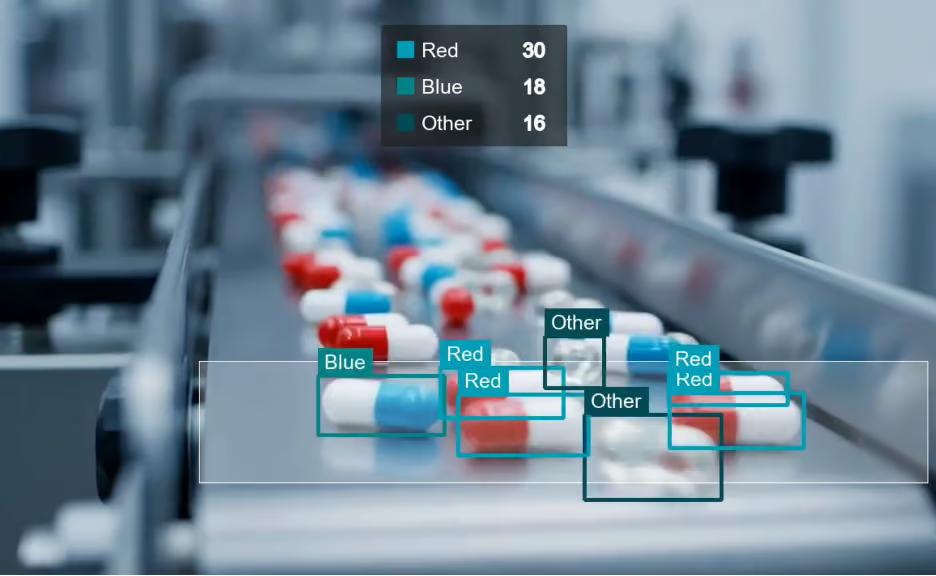
Counting sounds simple, but on a production or logistics line it comes in two demanding flavors. Sometimes the challenge is variety: a stream of mixed objects - parcels of different sizes, varied product types, pallets, containers- where the raw total is only half the story and each object needs to be classified by type, size, or category. Sometimes the challenge is speed and scale: hundreds of identical items per minute, each too small and too fast for any human to track - capsules and tablets on a pharmaceutical line, fasteners in electronics production, pieces on a food line.
The vision system handles both. It counts every object passing through a given point, classifies it where needed, maintains consistent precision regardless of line speed, and immediately flags any discrepancy against expected values. Throughput data that previously required manual counting or was only available after the shift ended now flows into dashboards and reports in real time, broken down exactly the way the business needs it.
Measuring Cycle Times
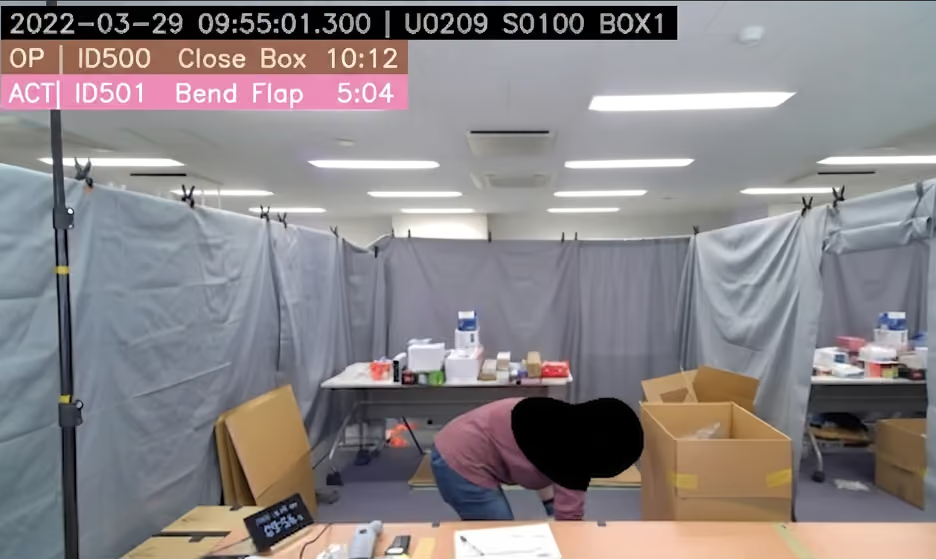
How long does a given operation take - assembling a device, packing an order, completing a workstation task - and how does that time vary between shifts, operators, or product variants? The vision system automatically measures the duration of each cycle and its individual steps. Every action is logged with a timestamp, providing reliable data for process optimization, workload balancing, and realistic production planning.Bottlenecks that were previously a matter of opinion become visible in hard numbers.
https://open-pack.github.io/
Workplace Safety
No reporting system reacts to a hazard as quickly as real-time video analytics. In the field of occupational safety, this is often the difference between an incident recorded in the statistics and an accident that was prevented.
Monitoring Personal Protective Equipment
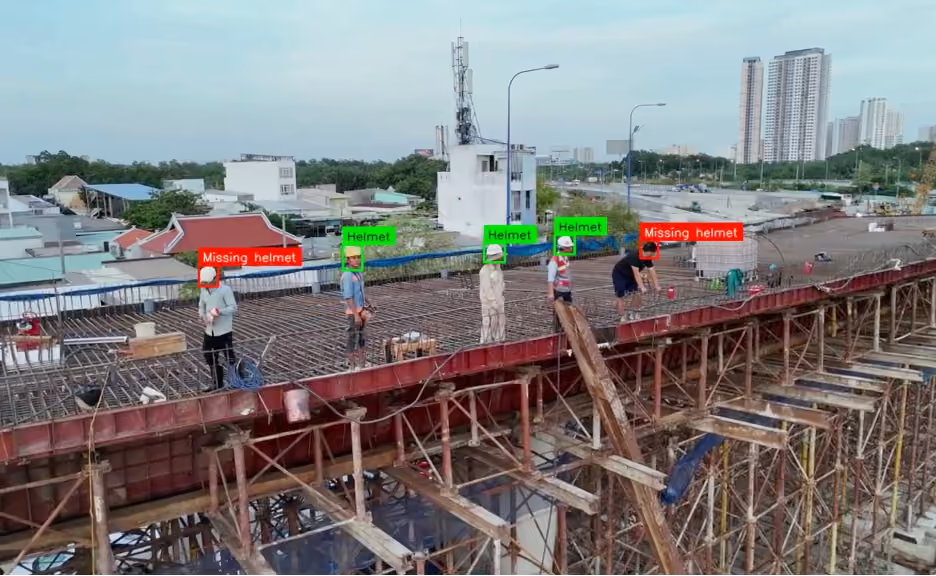
The system automatically verifies whether workers in designated zones are wearing the required protective equipment - a hard hat, a high-visibility vest, or other gear. A detected violation can trigger an immediate alert to a supervisor, an audio announcement in the zone, or an entry in the safety report. The monitoring is continuous and objective - consistently applying safety rules to all staff on the floor.
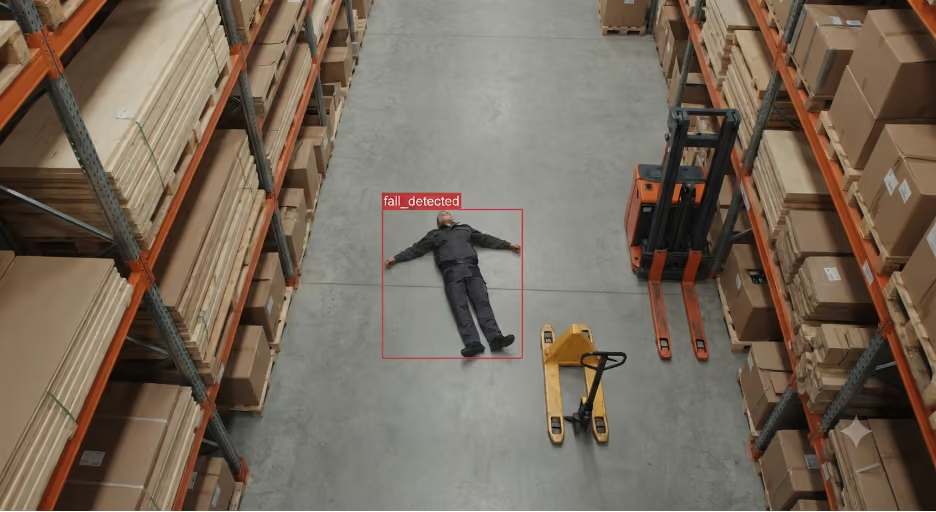
Detecting Fainting and Falls
On large production floors, in areas with limited visibility, or during lone work, a worker who has collapsed may go unnoticed for a long time. The vision system recognizes a fall or an unusual, motionless body position and immediately sends an alert to emergency responders or supervisors. When health is at risk, every minute counts.
Detecting Fire and Smoke
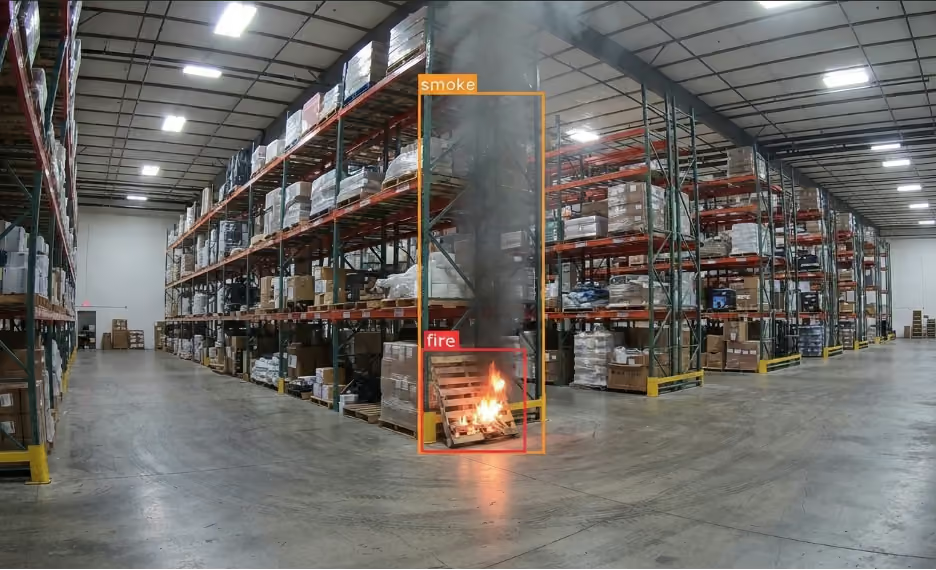
Conventional smoke detectors only react once smoke reaches the ceiling - in a high-bay facility, this can take precious minutes. Video analytics detects fire and smoke visually, right where they originate, often long before traditional systems respond. An early alert buys time to react before a small flare-up turns into a serious fire.
The Camera Is Just the Beginning
The common denominator of all the examples above is this: the camera stops being a passive recorder and becomes an intelligent sensor delivering business data. But detection alone doesn't change anything - a flagged defector a counted parcel only matters if something happens next: a faulty item gets rejected, a supervisor gets alerted, a report lands on the right desk.
That "something next" is exactly what we build at Codya. Every deployment starts with understanding the specifics of your site and ends with a complete working system: a model trained on data from your facility, the software that runs it on your camera streams, and the business rules on top - alerts, reports, and integrations with the systems you already use.
Wondering if this could work in your facility? Let's talk - we'll assess whether and where video analytics can be applied in your processes.